
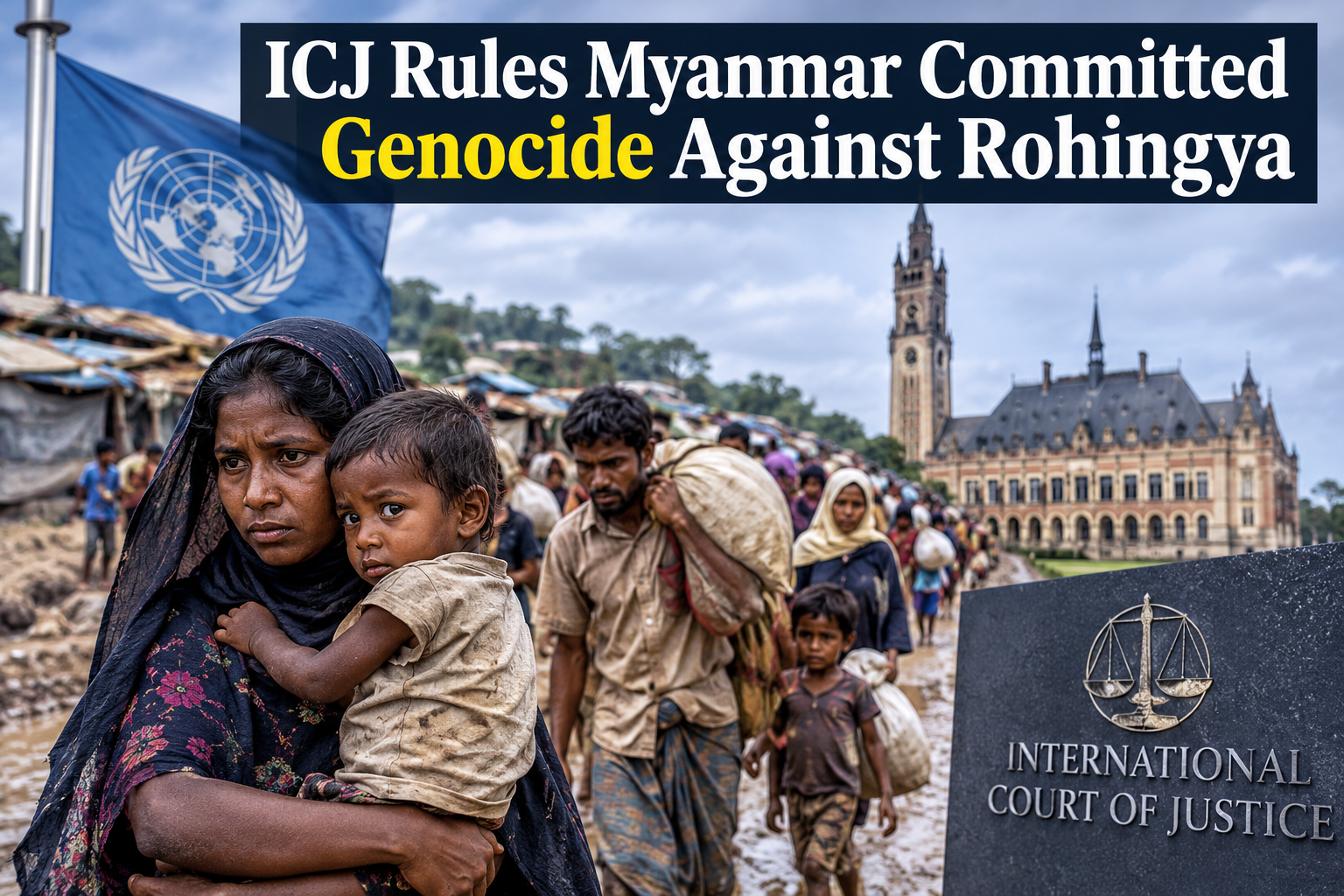
Myanmar committed genocide against Rohingya
Ansar Ahmed Ullah
Contributing Editor,Shottobani
London: The International Court of Justice (ICJ) has ruled that Myanmar committed genocide against the Rohingya population, marking a historic first in the court’s history of finding a United Nations member state responsible for genocide.
In its judgment delivered on 19 November 2026, the UN’s highest court found that Myanmar acted with genocidal intent during its military operations against the Rohingya, particularly the 2017 clearance operations in Rakhine State. The case was brought by The Gambia in November 2019, alleging that Myanmar had breached its obligations under the 1948 Genocide Convention.
The court found compelling evidence of large-scale killings, serious physical and mental harm, widespread sexual violence and measures intended to prevent births within the Rohingya community. It also concluded that the only reasonable inference from the evidence was that Myanmar intended to destroy at least part of the Rohingya group.
Myanmar had denied the allegations, arguing that its 2017 military operations were counter-terrorism measures targeting an armed group. However, the ICJ rejected this explanation as insufficient to account for the scale and nature of the violence. The judgment was supported by nine judges, while six dissented on various legal grounds.
The ruling also found Myanmar in breach of its obligations to prevent and punish genocide. The court ordered the country to investigate and prosecute those responsible, introduce appropriate legislation, prevent further violations and provide assurances that such crimes would not be repeated. It further called for measures to allow Rohingya refugees to return safely and voluntarily to their homes, reunite families and receive compensation for the harm suffered.
The judgment has prompted a strong response from the United Kingdom. Foreign Secretary Ed Miliband condemned the treatment of the Rohingya and pledged to ensure accountability. The UK announced that it would expel Myanmar’s Defence Attaché, summon the country’s chargé d’affaires and seek an urgent meeting of the UN Security Council.
The humanitarian crisis remains severe. An estimated 1.2 million Rohingya refugees are currently living in Bangladesh, while approximately 520,000 stateless Rohingya remain in Myanmar. Many have endured decades of discrimination, restrictions on their rights and displacement.
The UK has provided £447 million in humanitarian assistance to Rohingya refugees in Bangladesh since 2017. It has also reiterated that any eventual return to Myanmar must be safe, voluntary and dignified.
The ICJ’s landmark ruling represents a significant step towards international accountability for the Rohingya genocide. However, ensuring justice, securing reparations and creating conditions for the safe return of displaced communities remain major challenges.